Transport, Style, and the Split That Runs Through the Whole Sport
An argument about the fundamental division within free-heel skiing — between those who use the free heel as a touring mechanism and those who use it as an expressive style — and how the binding and boot markets have each served, and deepened, that split.
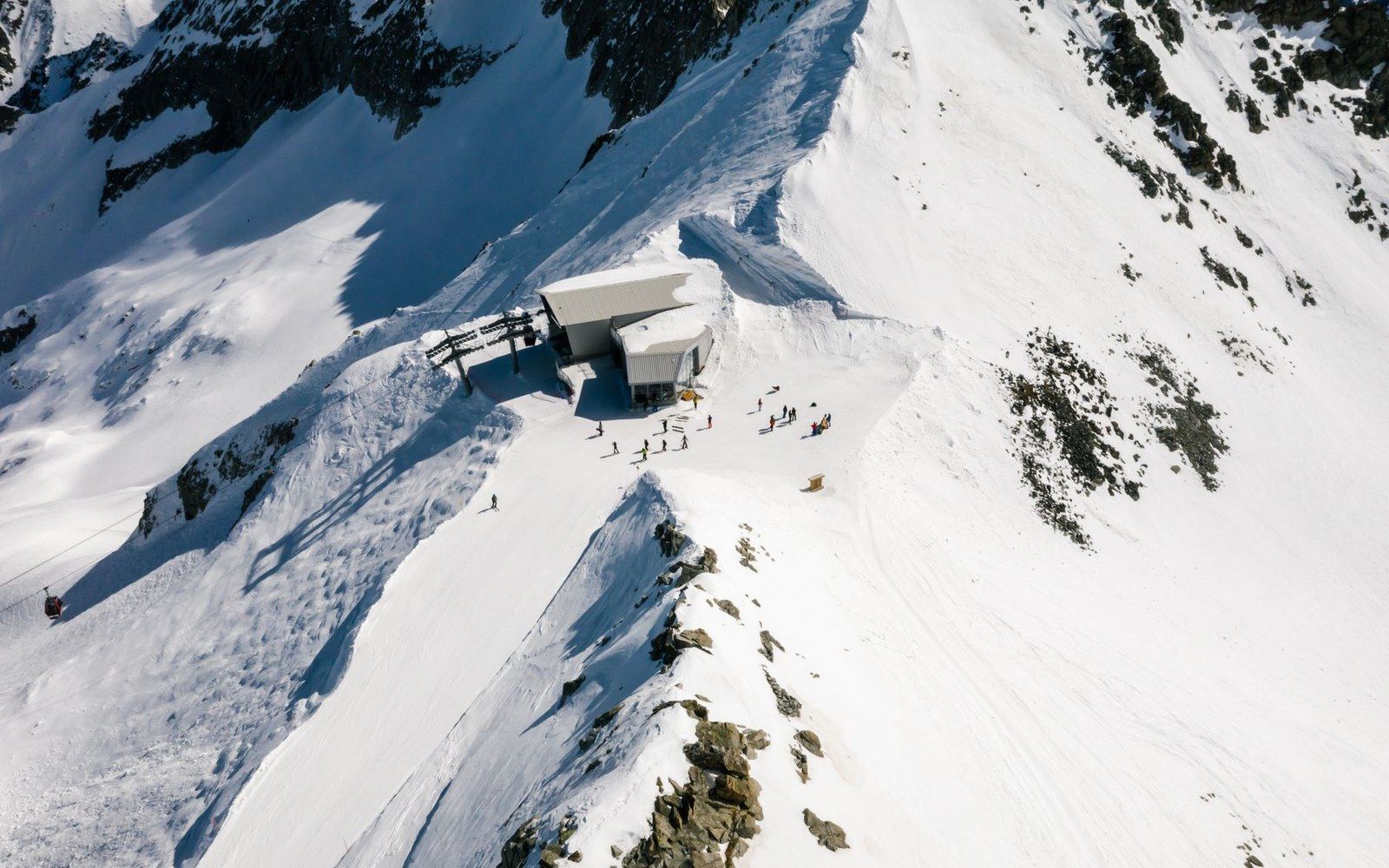
Two populations, one binding: the tourer and the stylist.
Photo: Mikhail Nilov / Pexels
Free-heel skiing has always contained two different arguments about what a free heel is for — and the hardware has been making that argument louder for thirty years.
The Original Ambiguity
The free heel was never a style choice first. It was a functional inheritance from Nordic skiing, where an unattached heel is simply what allows a striding gait on flat terrain. The telemark turn arrived as a solution to a movement problem — how to descend on equipment designed primarily for travel — and for most of the twentieth century the two functions were inseparable. You skied uphill because you had to, and you skied downhill because gravity required it, and the same three-pin binding with its 75mm duckbill served both without apology.
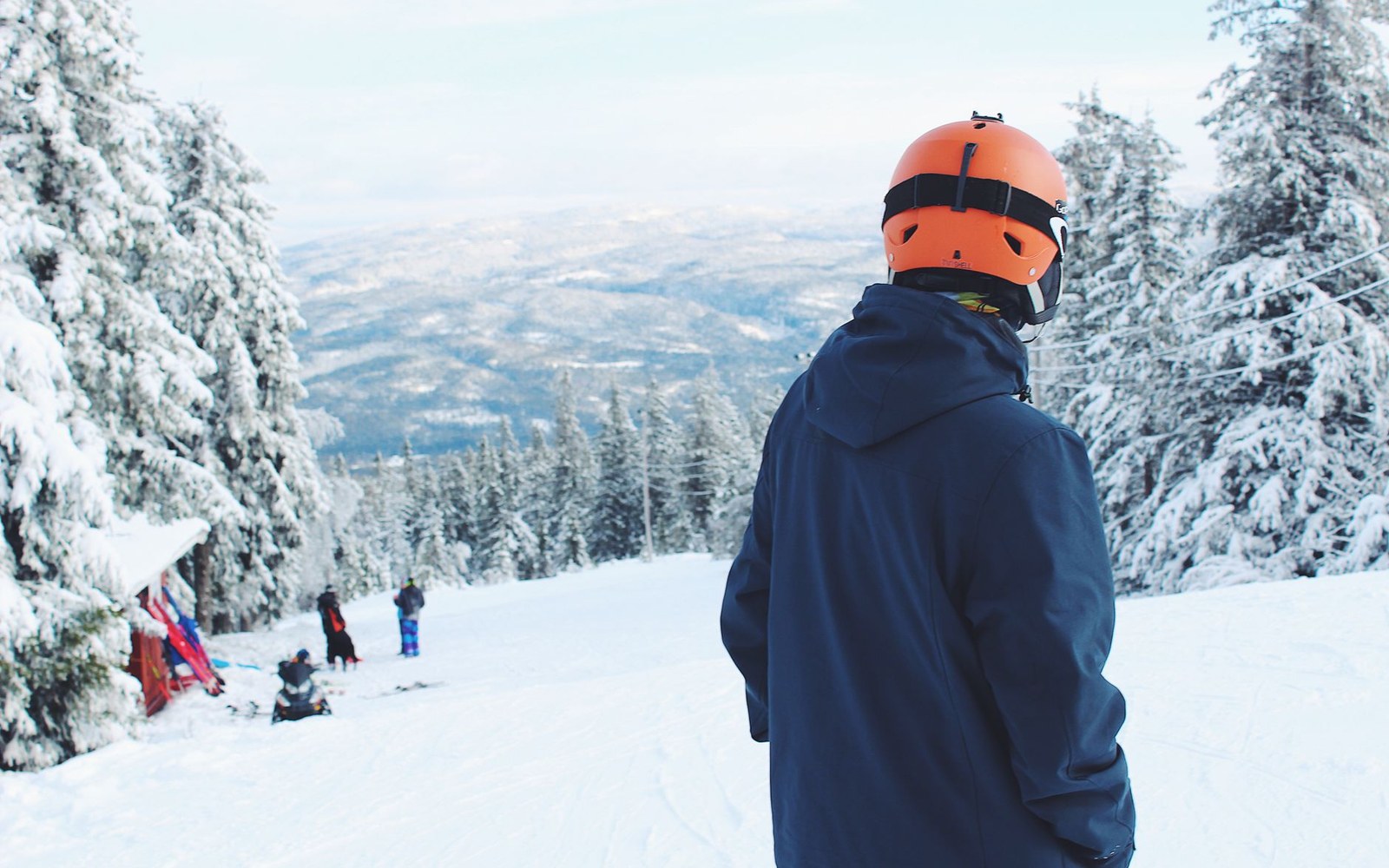
Mid-lead-change. The trailing ski carries as much of the turn as the leading one.
Photo: Elisabeth Fossum / Pexels
What changed, gradually, was the arrival of lift-served telemark. Once chairlifts removed the uphill problem, the downhill style became an end in itself, and the community began to fracture along a line that had always been latent. On one side: people who use a free heel because it allows them to travel under their own power through terrain no lift serves, and for whom the telemark turn is a tolerated side effect of the binding, not the point. On the other: people who have made the drop-knee position the entire point, who ski resort terrain on stiff NTN setups specifically to express something the alpine world cannot — and who may never sleep in a hut or carry a beacon.
Neither camp is wrong. But they want different things from manufacturers, and the manufacturers have responded accordingly.
What the Hardware Made Permanent
The New Telemark Norm in 2007 did not create this split, but it did institutionalise it. NTN produced stiffer boots, more powerful bindings, and — eventually — releasable systems like the Meidjo from The M Equipment that gave aggressive resort skiers something close to alpine safety performance. That was the point. The norm's architecture also permitted partial tech-toe compatibility, pulling NTN toward the alpine touring world it had partly been designed to address.
The touring camp, meanwhile, was finding that heavier NTN boots and bindings were a real cost on long approaches. Cable bindings from Voile, operating out of Salt Lake City, kept a market alive for lighter, less aggressive setups. The Voile Switchback became a particular expression of this priority: a binding that works well enough on the way down because it works reliably on the way up. 22 Designs, based in Driggs, Idaho, at the base of the Tetons, has navigated both registers — its Outlaw X is an NTN resort binding, its Lynx a lighter cable system — and the coexistence within a single small company's catalogue illustrates how impossible it is to serve just one camp.
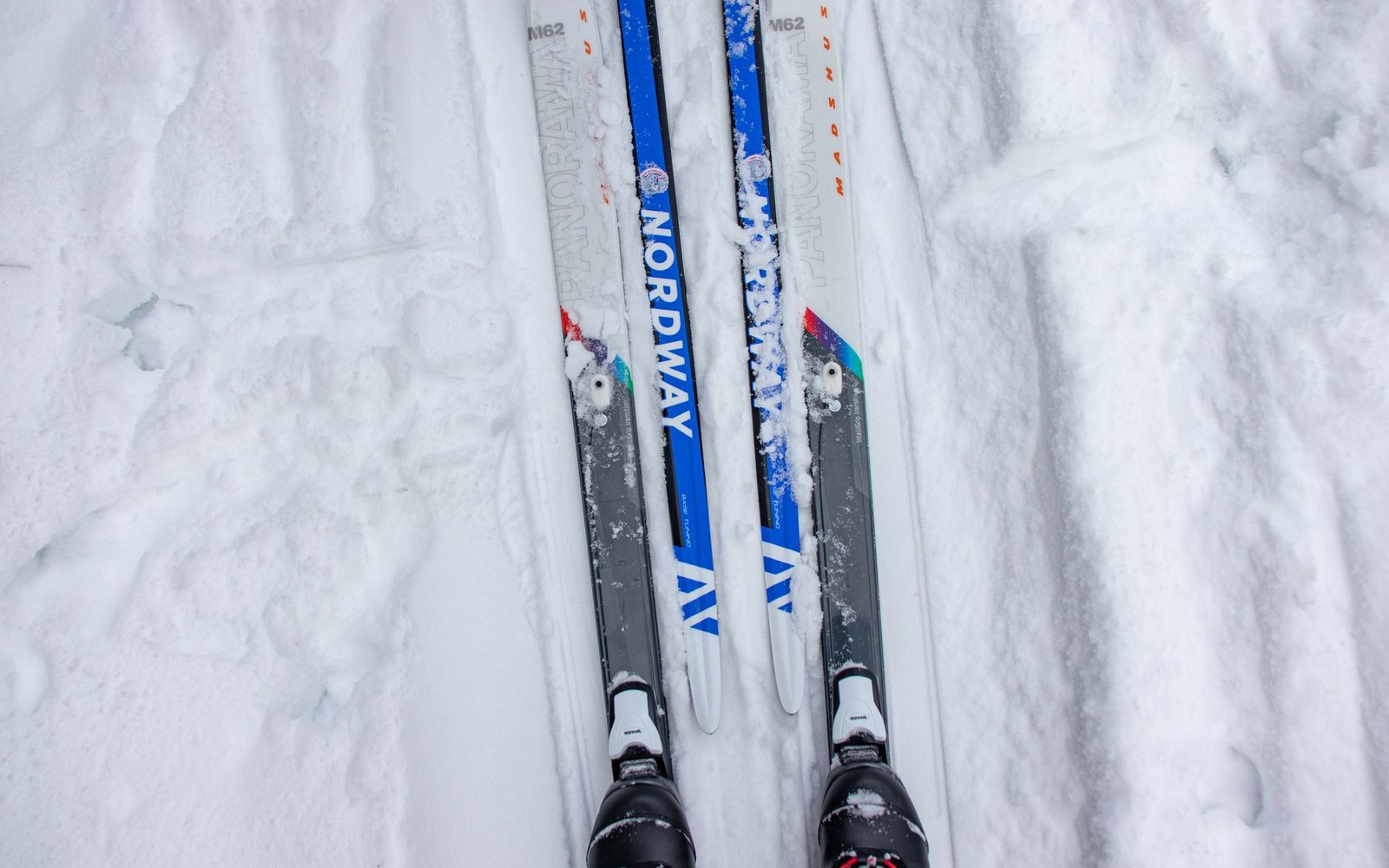
The crease is the point. A bellows is the only part of a ski boot built to bend.
Photo: Irina Zimno / Pexels
Boot makers face the same pressure. Scarpa's TX Pro sits toward the performance-resort end of the spectrum, with a shell geometry that rewards aggressive skiing and an internal volume suited to shaped ski technique. Crispi's NTN range occupies similar territory. Both companies understand that the touring customer is often happy with an older, lighter boot, or has drifted toward AT systems entirely. The bellows construction that defines a telemark boot's character — that accordion-like shell flex allowing heel lift while the boot remains attached — is genuinely harder to optimise simultaneously for a long skin track and a steep resort run. Stiff enough to drive a modern ski confidently, and the flex resistance is fighting you on the climb. Soft enough for comfort over eight kilometers of approach, and the descent feels vague.
The Cultural Geography
The split has physical addresses. The Wasatch Range, centred on Salt Lake City, and the Teton Range around Driggs and Jackson are both free-heel strongholds, but the skiing culture in each leans slightly differently. The Wasatch's proximity to urban Utah and its dense network of resort terrain produces a community with a strong resort-telemark strand — people who ride the Snowbird tram in NTN gear and are very serious about their turns. The Tetons attract a backcountry-first population for whom the binding is a transport system and the style is secondary.
The Tetons attract a backcountry-first population for whom the binding is a transport system and the style is secondary
Mad River Glen in Vermont is something different again: a cooperative-owned ski area that has preserved free-heel culture partly as an aesthetic stance, a refusal of the homogenised alpine resort. Mad River skiers are not primarily backcountry tourers, but their free-heel commitment is also not reducible to performance. It is, in some measure, political.
The Chic-Chocs in Quebec's Gaspésie represent yet another variant — hut-to-hut terrain where the free heel is entirely instrumental, where the question of what your turn looks like is genuinely irrelevant to the people skiing next to you.
The Race Question
Competitive telemark sharpened the style argument to a fine point, and the FIS Telemark World Cup's removal from the 2026 calendar has left that argument without its most visible stage. The World Cup format — especially the parallel sprint, in which two competitors descend simultaneously on parallel courses — was unambiguously about expressive technique under competitive pressure. It had almost nothing to do with transport. The racers used the stiffest possible NTN equipment, optimised for a timed run, and the independent event series that emerged after the FIS withdrawal shows that constituency still exists — it simply no longer has FIS infrastructure behind it.
The US Telemark Ski Association governs the North American race series, and its continued operation is evidence that the competitive, style-first community is neither small nor passive. But racing, by defining what a telemark turn should look like under scrutiny, has always made the touring community slightly uncomfortable. A perfect race telemark turn and an efficient backcountry telemark turn are not the same movement executed at different speeds. They are, in some sense, different arguments about what the sport is.
No Resolution
The split will not resolve. The hardware manufacturers have stopped trying to resolve it and started designing for discrete customers. That is probably the honest outcome. A skier skinning into the Chic-Chocs with a light cable binding and a soft boot is not doing something worse than the racer in a stiff NTN shell at a World Cup venue — they are doing something different, sharing only the mechanical fact of a heel that is free to rise.
That shared fact turns out to be enough to hold one sport together. But only barely, and only if both sides are willing to stop explaining to the other camp what free-heel skiing is really for.