Scarpa TX Pro: Boot as Argument
A close reading of the Scarpa TX Pro — its shell geometry, liner design, power-strap placement, and the engineering choices that make it one of the most widely referenced NTN boots. Draws on Scarpa's published specifications.
Four buckles and a moulded flange — the boot the NTN binding was designed around.
Photo: scarpa.com
One boot keeps appearing at the centre of every serious NTN conversation — not by accident.
What the Shell Says
Scarpa makes the TX Pro in Italy, and the boot's geometry reflects that provenance: a close-fitting, asymmetric polyurethane shell shaped around a last derived from Scarpa's alpine touring line rather than from the wider, more forgiving lasts common in Nordic-heritage telemark boots. The result is a high, stiff cuff that sits notably upright compared to older cable-binding designs. Scarpa publishes the forward-lean angle at 15 degrees — modest by alpine standards, steep enough to keep the cuff engaged during the drop-knee position without forcing the shin into premature conflict with the tongue on the uphill stride.
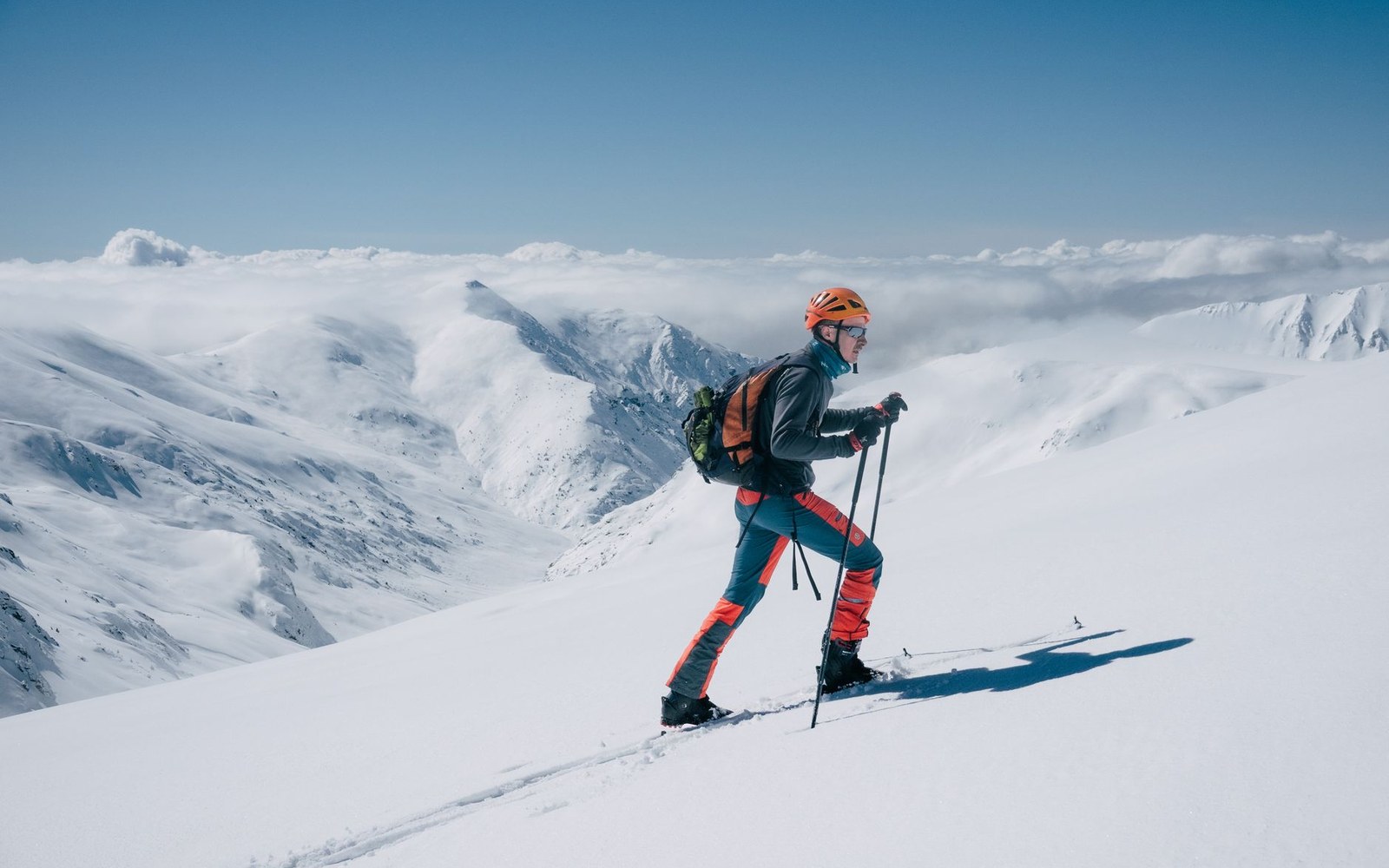
Skins off at the top. Compatibility with the toe piece is now a purchase criterion.
Photo: Jordi Costa Tomé / Pexels
The shell uses a dual-density construction: a stiffer outer polyurethane wraps a slightly more compliant inner zone at the bellows — the accordion-like flex zone that allows the heel to lift while the boot remains locked to the binding. Getting that zone right is the central engineering problem in any telemark shell. Too stiff and the skier fights the boot through every lead change; too soft and power transfer degrades. Scarpa's published specifications list a flex index of 70 for the standard TX Pro, which places it toward the firm end of the NTN touring market without reaching the stiffness of dedicated race equipment.
The Liner and the Strap
The TX Pro ships with Scarpa's Alu-Power liner, a heat-moldable design with an aluminium layer bonded into the ankle wrap. That aluminium foil layer — thinner than it sounds, incorporated into the laminate — adds lateral stiffness at the ankle without adding perceptible weight, and it transfers heat from the foot outward more slowly than foam alone. The liner is removed and remolded using a standard boot oven, a process Scarpa details in its fitting documentation and that most specialty shops carry out as a matter of course.
The power strap sits high on the cuff, above the upper buckle. That placement is a deliberate argument: a strap low on the cuff tightens the shell against the shin and limits cuff travel; a strap above the buckle stack cinches the cuff-to-shin interface independently of the buckle closure, letting the skier dial cuff pressure without reopening the shell's main closure system. Scarpa uses a wide Velcro strap here rather than a ratchet, trading micro-adjustment precision for the ability to rip the strap loose and reapply it at the top of a skin track in a few seconds.
The NTN Interface
The TX Pro is built exclusively for the New Telemark Norm, the binding and boot interface standard introduced in 2007 that replaced the 75mm three-pin duckbill and added a rotational-release mechanism. The NTN sole geometry — with its recessed toe channel and raised heel platform — is moulded directly into the TX Pro's outsole rather than added as an aftermarket plate, which keeps stack height lower than boots that graft an NTN sole onto a frame originally designed for a different standard.
Both norms on one wall: duckbill and NTN setups rack together, ski for ski.
Photo: DYLBER CAUSHI / Pexels
The outsole itself uses Scarpa's Vibram base with a heel and toe lug pattern borrowed from light mountaineering boots. In a discipline where skiers walk approaches, scramble to transitions, and occasionally hike out of terrain that closes unexpectedly, that outsole grip is not a styling choice. Crispi and other NTN boot makers have made comparable outsole decisions, but the Vibram specification on the TX Pro is among the more aggressive in the category.
Why It Keeps Being Referenced
The TX Pro does not try to be the lightest NTN boot or the stiffest. It lands in a band of stiffness, weight, and walkability that a wide range of skiers — those touring the Wasatch Range on moderate-angle terrain, those lapping lifts at a resort like Mad River Glen — find workable on the same day. That breadth is exactly what makes it a reference point: it defines a centre of the category rather than an extreme, and every other NTN boot is implicitly measured against where it lands ↗.