The Drop Knee and the Ankle: What the Research Says
Surveys the published knee-injury literature specific to telemark skiing — the biomechanical studies, the incidence data from named research publications, and what the findings describe about the demands free-heel movement places on the lower limb.

What the published research actually measures at the knee and the ankle.
Photo: Wikimedia Commons contributor · Wikimedia Commons
The Biomechanics Are Not Subtle
Telemark skiing asks the rear knee to travel toward the ski while the boot heel lifts freely and the entire kinetic chain from hip to foot absorbs lateral and longitudinal load simultaneously. That is an unusual demand. Most skiing injuries concentrate at the knee in a well-documented pattern, but telemark's drop-knee position loads the joint differently from alpine skiing — and the published literature has begun to map exactly how.
The most cited work in this area comes from Scandinavian sports medicine, where telemark skiing has a large enough participant base to generate meaningful incidence data. A study by Ekeland and colleagues, published in the Scandinavian Journal of Medicine and Science in Sports, recorded injury rates in Norwegian telemark skiers and found knee injuries occurring at rates that differed structurally from alpine cohorts — not necessarily higher, but distributed across different anatomical sites and movement phases. The rear knee, in particular, sustained injuries associated with the extreme flexion demanded at the base of the drop-knee turn, a range of motion that few other skiing disciplines approach.
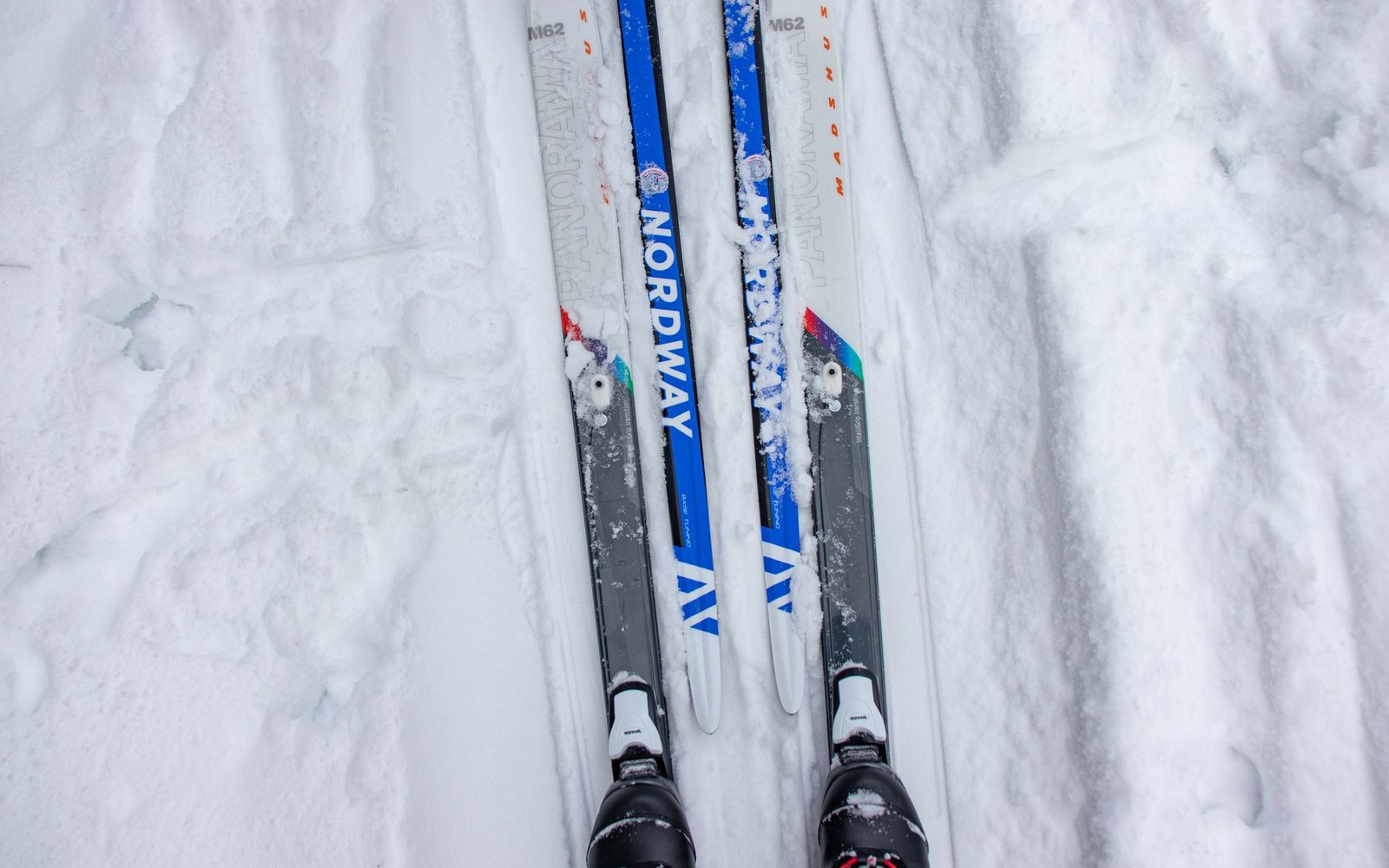
The crease is the point. A bellows is the only part of a ski boot built to bend.
Photo: Irina Zimno / Pexels
The biomechanical logic is not difficult to follow. When the rear knee drops, the tibiofemoral joint moves into deep flexion while the heel remains elevated — a combination that increases compressive force on the posterior capsule and strains the posterior cruciate ligament (PCL) in ways an alpine binding, with its heel fixed and releasing upward under a forward fall, does not. Alpine binding design evolved to protect the ACL from forward twisting falls. The PCL demands of telemark's drop-knee position were, for most of binding history, unaddressed by any release mechanism.
What Releasability Changes — and Does Not
The arrival of the New Telemark Norm in 2007 brought a rotational-release mechanism to bindings for the first time in the discipline's history. Rottefella's NTN system and The M Equipment's Meidjo both incorporate release — Rottefella quantifying its NTN Freeride's release values in their published technical specifications. The logic is that a binding releasing under lateral torque reduces ACL loading during forward and twisting falls, the same loading pattern that alpine bindings address.
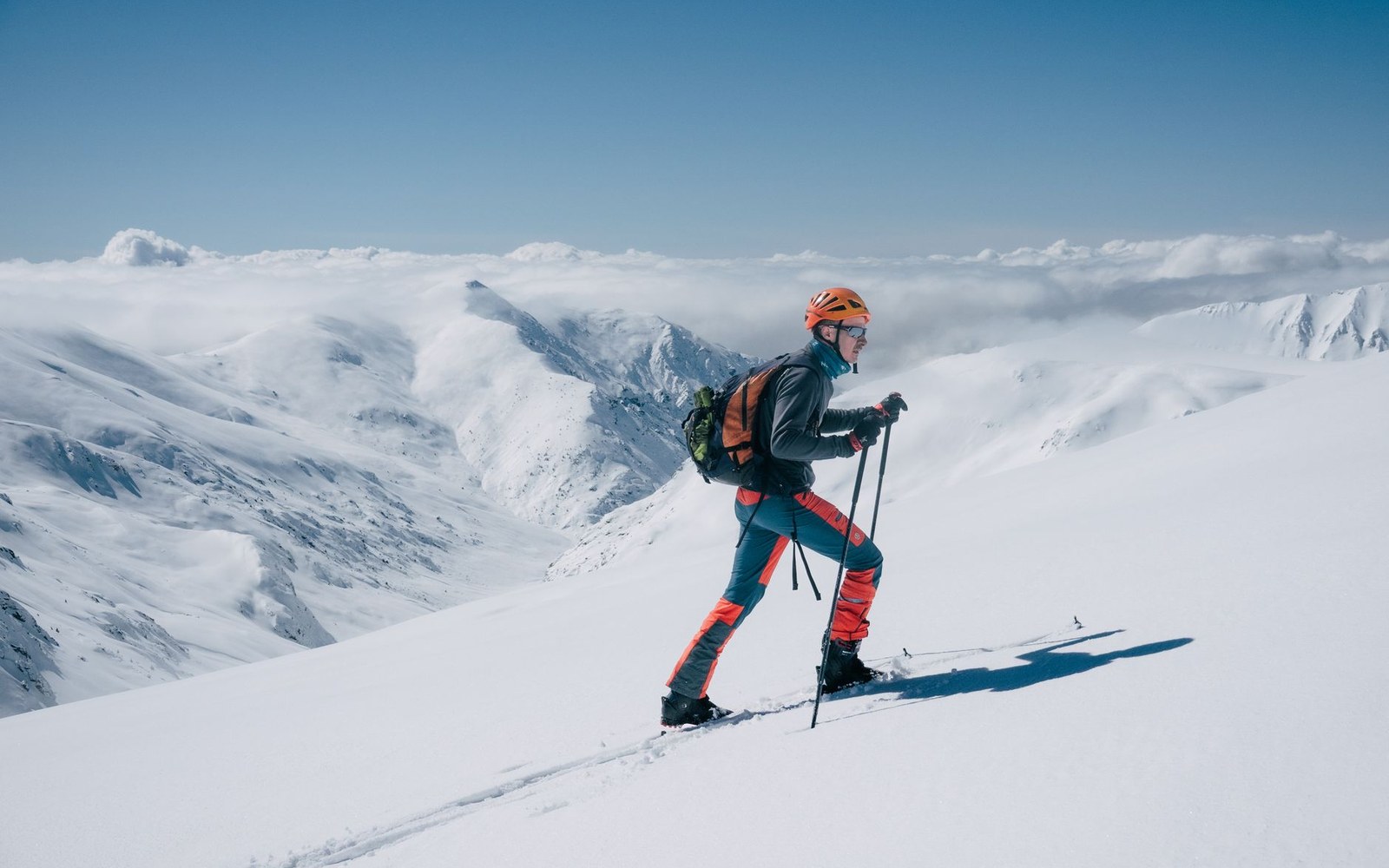
Skins off at the top. Compatibility with the toe piece is now a purchase criterion.
Photo: Jordi Costa Tomé / Pexels
What release mechanisms cannot change is the volitional, sustained deep flexion of the drop-knee itself. A binding releases on an uncontrolled fall; it cannot preempt a voluntary position held through a thousand turns in a day. Research into knee loading in free-heel skiing — including work by Ruedl and colleagues examining lower-limb injury across snow sport disciplines — consistently distinguishes between acute traumatic injury, where binding release is relevant, and cumulative or positional stress, where it is not. Telemark's injury profile includes both, which complicates any single engineering response.
The ankle deserves separate attention. Because the telemark boot's bellows construction allows heel lift while the toe remains fixed to the binding, the ankle dorsiflexes through a range that a fully-cuffed alpine boot prevents entirely. Published gait-analysis research on Nordic and telemark movement patterns documents substantially greater ankle excursion than in alpine skiing — excursion that loads the Achilles tendon and places stress on the talar joint under the asymmetric loading of the lead-change transition. Crispi, Scarpa, and other NTN boot manufacturers have all moved toward stiffer cuffs in recent seasons, a design choice that limits that excursion at the cost of turn character, and that reflects — without any maker explicitly citing it — exactly what the biomechanical literature describes.
What the Numbers Do Not Yet Resolve
The honest assessment is that the telemark-specific injury literature remains thin. Participant numbers outside Norway and the Swiss Alps are small enough that most published studies note their own statistical limits. The US Telemark Ski Association does not maintain a centralised injury registry. FIS Telemark World Cup ↗ medical reporting covers a tiny elite population whose fitness and technique differ substantially from recreational participants. What the existing studies establish clearly is the mechanism — deep knee flexion, asymmetric ankle loading, heel-rise under load — without yet producing the large-cohort longitudinal data that would let researchers say with confidence how injury rates compare across free-heel disciplines or across decades as boot stiffness has increased. That study, as of 2025, has not been done.