The Lead Change, Described
A close description of the telemark lead change as a movement pattern — the sequence of foot positions, the role of the trailing ski, and how the change reads visually in flat winter light. Written as observation, not instruction.
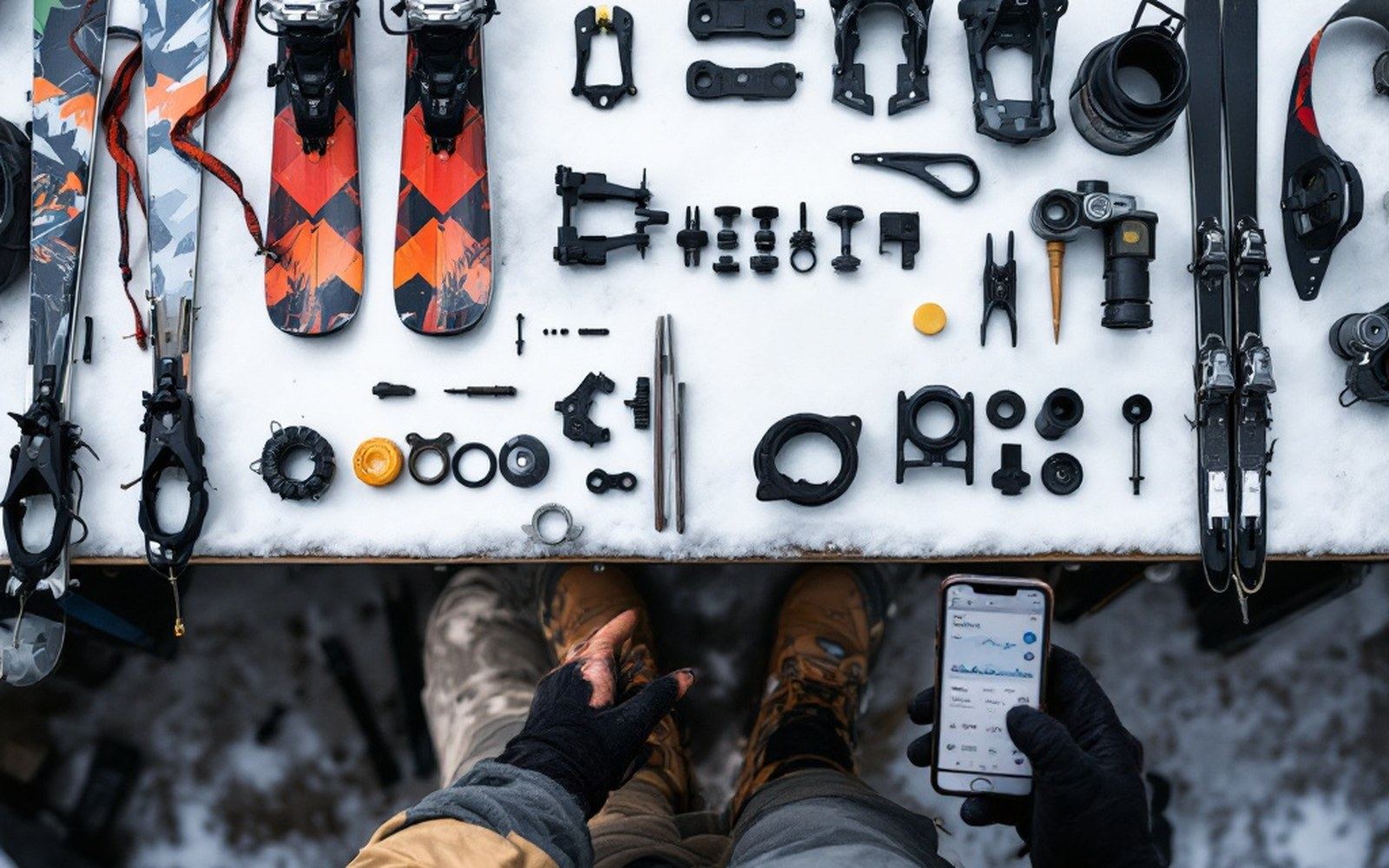
The moment the lead foot swaps. Described here, not taught.
The most distinctive motion in skiing is also the one hardest to catch the moment it happens.
The Sequence, Observed
Stand at the edge of a groomed run and watch a telemark skier in flat winter light. The first thing the eye registers is the alternation — not the drop-knee position itself, but the rhythm underneath it, the steady exchange of front foot and back foot through each successive turn. That exchange is the lead change, and it is what separates telemark from every other sliding discipline on snow.
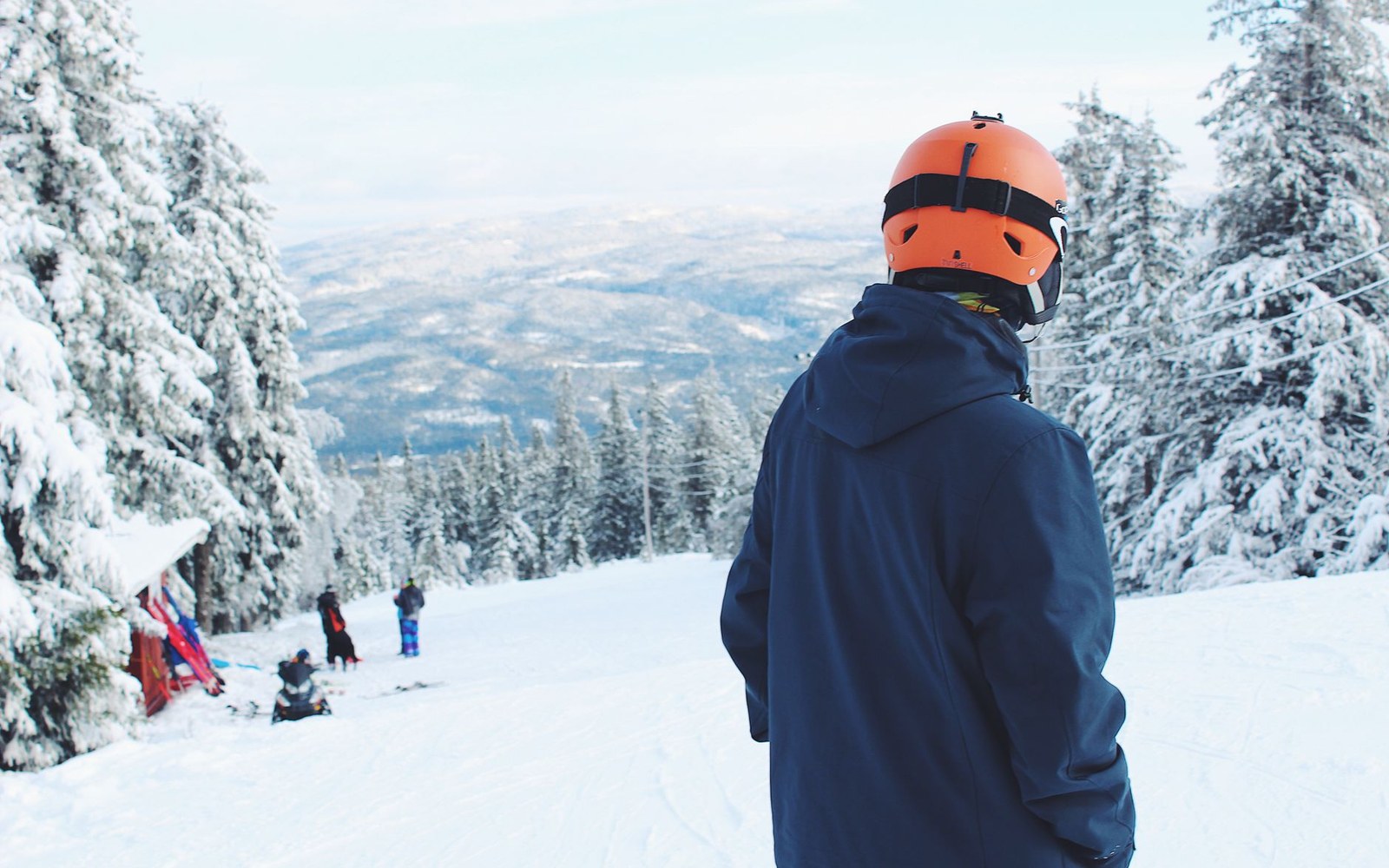
Mid-lead-change. The trailing ski carries as much of the turn as the leading one.
Photo: Elisabeth Fossum / Pexels
A telemark turn begins with one foot already committed forward. The skier's weight rides over that lead ski's binding, and the trailing ski floats somewhere behind and beneath — weighted enough to steer, light enough to leave at any moment. During the turn itself, the rear knee drops toward the ski's surface, the heel lifts against the binding's spring tension, and the bellows zone of the boot accordions under load. The geometry is stable and recognisable: the longer the skier holds it, the more classical it looks.
The change arrives at the transition. The skier rises slightly from the drop-knee position — not dramatically, but enough to unweight both feet briefly — and the foot that was trailing drives forward while the foot that was leading pulls back. For a fraction of a second, both skis are roughly level, both boots nearly flat. Then the new lead ski extends ahead, the new rear knee begins to drop, and the next turn is already establishing itself.
Chronology and origin
- Sondre NorheimNorwegian skier associated with early documentation of the telemark turn in nineteenth-century Norway
- Free-heel skiing's Nordic originsthe mechanical logic of the lead change connects directly to cross-country stride mechanics
Catch it in slow motion and the lead change ↗ reads as a walking cadence imposed on a sliding system: a continuous alternation of stance and swing phase that has more in common with the mechanics of cross-country striding than with any alpine motion. That connection to Nordic origins is not accidental. The telemark turn was documented in nineteenth-century Norway, where Sondre Norheim and others were skiing terrain that required both gliding efficiency and active steering, and the free heel was the hinge that made both possible.
What the Trailing Ski Is Actually Doing
The trailing ski is often misread as passive. It is not. On groomed snow, it carries enough weight to lay a faint second arc beside the lead ski's track — visible in the right light as a pair of shallow parallel curves rather than a single carved line. On ungroomed or variable snow, the trailing ski's edge angle and pressure shift constantly, responding to surface changes the skier reads a fraction before reacting. Remove it from the equation and the lead ski loses the counterbalance that makes the drop-knee position structurally coherent.
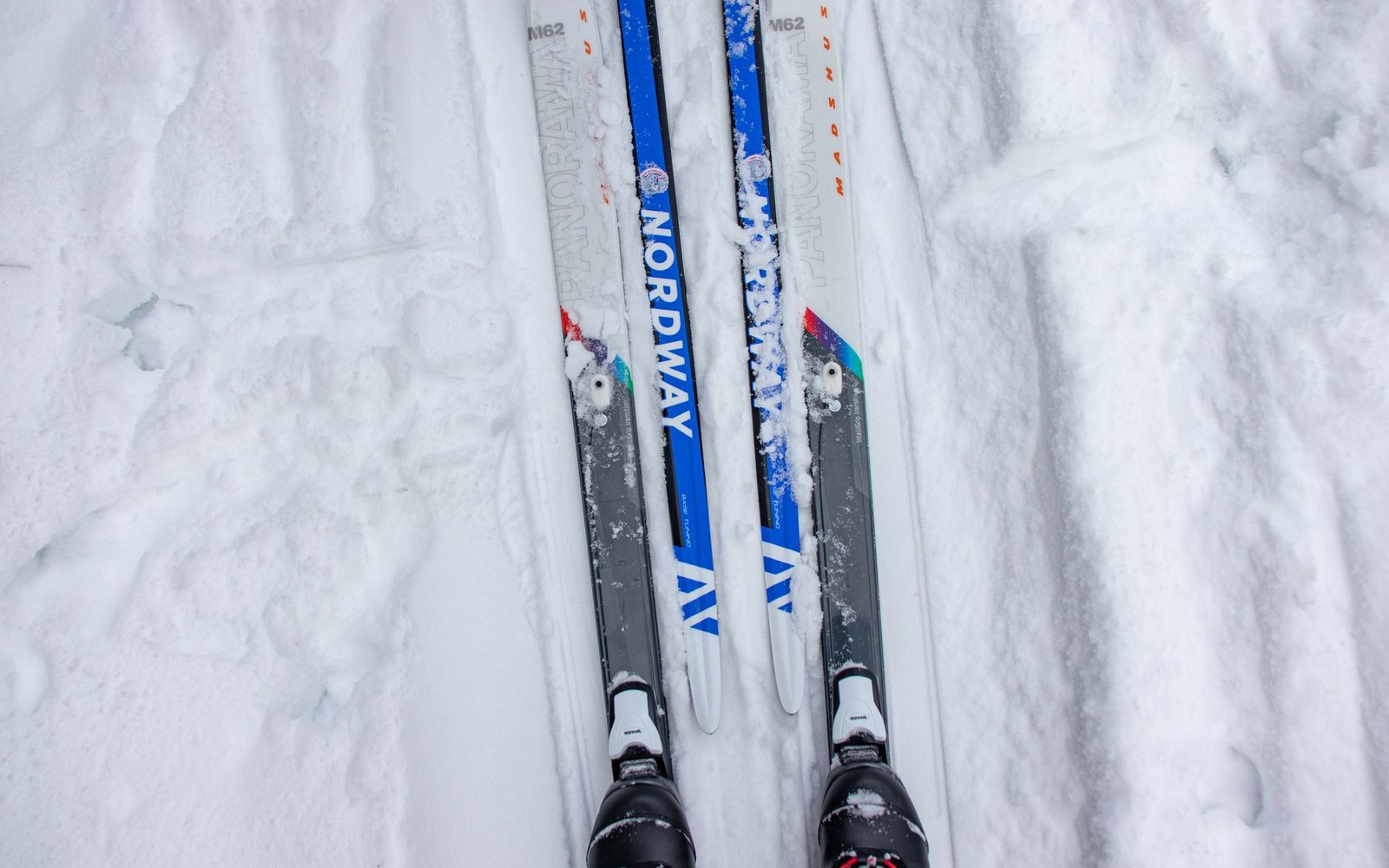
The crease is the point. A bellows is the only part of a ski boot built to bend.
Photo: Irina Zimno / Pexels
The width of the skier's stance — measured as the gap between the two boots at mid-turn — varies considerably across individuals and conditions. A narrower stance concentrates pressure on the lead ski and sharpens the carved component of the turn. A wider stance distributes load more evenly and broadens the platform the skier can draw on when the snow surface changes mid-arc. Neither is definitively correct; both are visible in competition footage, and both appear in the records of FIS Telemark World Cup racing across the classic and parallel sprint formats contested over the discipline's World Cup history.
How It Reads
From a fixed position in flat winter light — the kind of low-contrast illumination that kills shadow and flattens terrain — the lead change is the one motion that remains legible. Alpine turns are visible mainly through edge angle and speed. Snowboard turns read through body rotation. The telemark turn announces itself through the alternating silhouette: the forward knee, the dropped rear knee, then the switch, then the forward knee again on the other side. It has a pulse. Filmmakers and photographers have chased that pulse for decades, and the most arresting telemark images are almost always taken at the moment of transition — that brief, level, between-state instant before the new lead has fully committed.
It is, functionally, a moment of equipoise. The skier is neither in the old turn nor the new one.