Three Formats, One Discipline
Describes the FIS Telemark World Cup's classic, sprint, and parallel sprint formats — the course requirements, the scoring structure, and how each format developed from the discipline's transition into FIS governance.
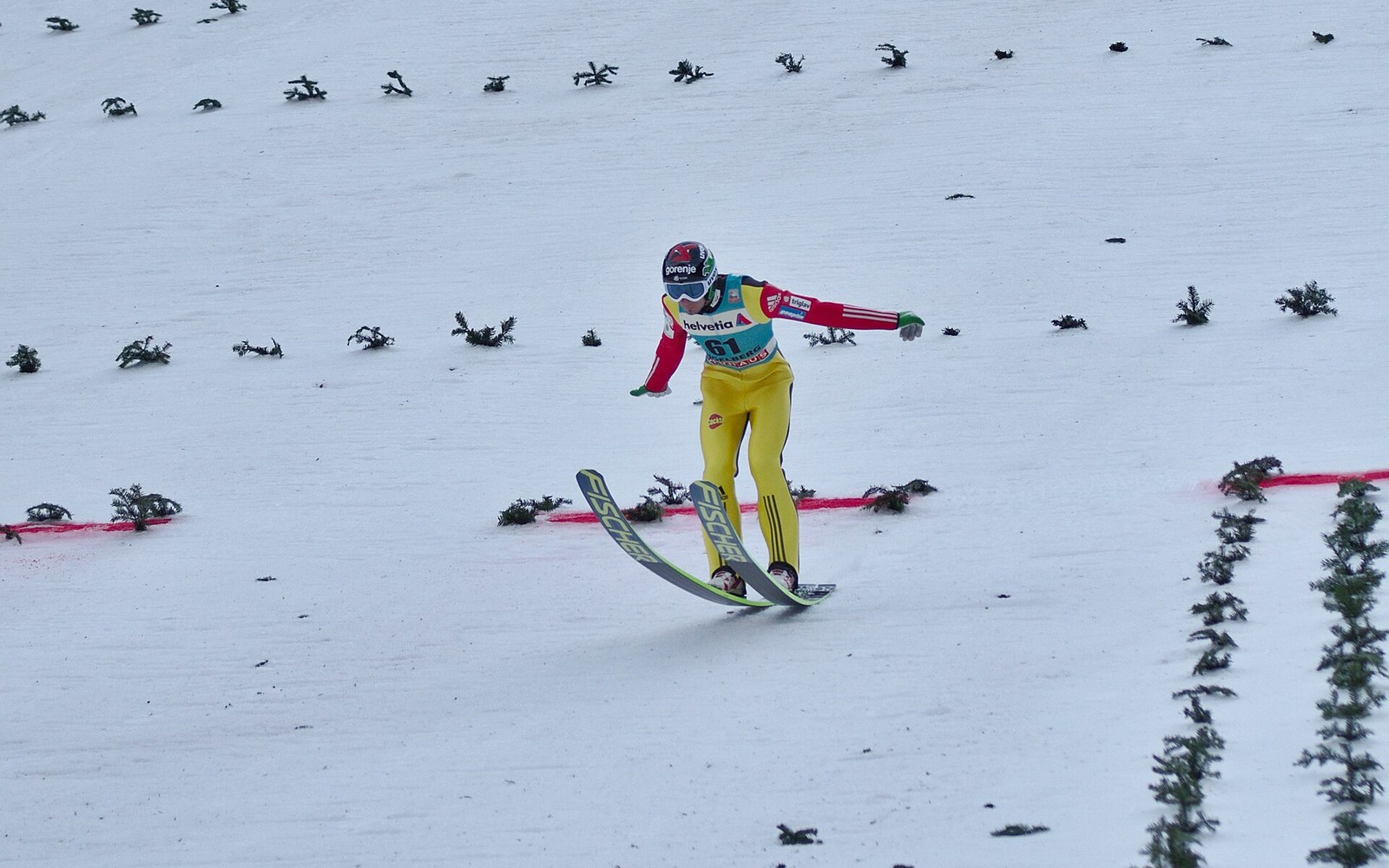
Classic, sprint and parallel sprint — three formats inside one discipline.
Photo: FIS Ski Jumping Worldcup Engelberg 2014 · Wikimedia Commons
The FIS Telemark World Cup runs on three distinct race formats. Each asks a different question of the same turn.
The Classic and Its Demands
Telemark racing entered FIS governance in 1994, carrying with it a format that already existed in recognisable form: the classic, a timed solo descent combining linked telemark turns, a series of jumps, and a gate-defined course that rewards both technical purity and outright speed. Under FIS rules, the classic course requires competitors to demonstrate the drop-knee position through a specified number of gates; judges score technique while the clock runs. The combined result — time and technical marks — determines placement. It is, in design, closer to alpine combined than to a pure speed discipline, which has always made it awkward to broadcast and easy to misread.
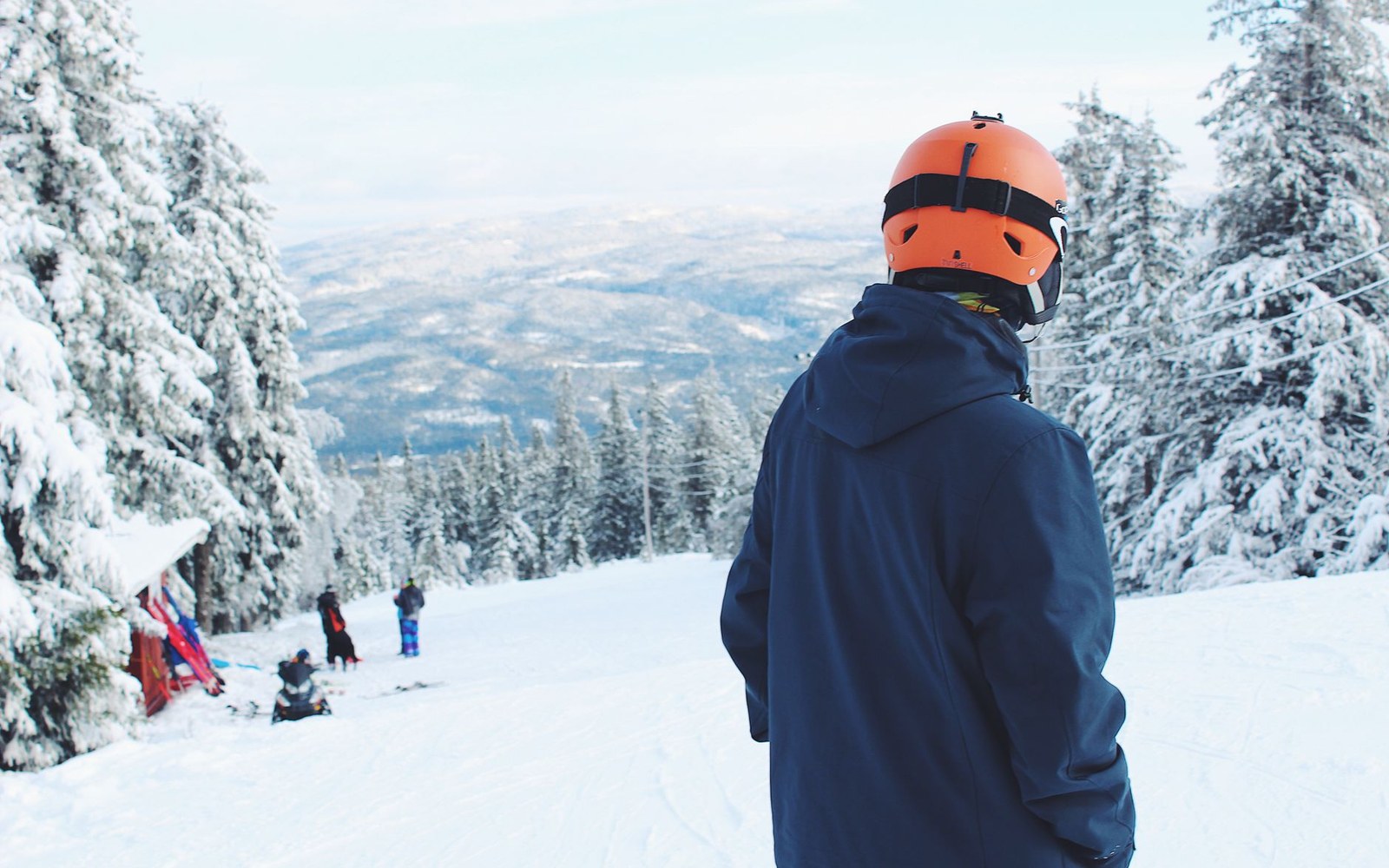
Mid-lead-change. The trailing ski carries as much of the turn as the leading one.
Photo: Elisabeth Fossum / Pexels
Course terrain for the classic is typically set on moderate to steep fall-line pitches, with mandatory aerial features that demand airtime before a clean landing and continuation of the turn. The FIS Telemark specification sets minimum vertical drop requirements and mandates the inclusion of at least one jump section. Judges assess the telemark position independently of speed, and a skier who runs fast but fails to commit to the characteristic stance — heel lifted, rear knee dropped — loses points that the clock cannot recover.
Sprint: The Clock, Simplified
The sprint format stripped the judged element back to a single run against the clock on a shorter, technically demanding course. Where the classic rewards consistency over a long run and rewards competitors who can hold technical form under fatigue, the sprint is an efficiency test. Course length is reduced, vertical drop is lower, and the format was developed partly in response to venue and schedule constraints: a sprint can be staged on a narrower corridor, set faster, and run more competitors through a day's programme.
Judged elements remain — a competitor who abandons the telemark position at the gates earns a penalty — but the shorter course compresses the margin for error in both directions. A single poor jump or lost gate costs proportionally more. The sprint format entered the World Cup schedule as a complement to the classic, giving broadcasters a faster product and smaller venues a realistic path to hosting.
Parallel Sprint: Two Skiers, One Outcome
The parallel sprint format is the World Cup's most legible product to a casual audience: two competitors on side-by-side courses, same terrain, same gates, leaving simultaneously. The winner advances; the loser goes home. It runs as a head-to-head bracket tournament, seeded from qualification times, and it produces the kind of direct comparison — one human against another, right now — that the solo-timed formats cannot match.
Both norms on one wall: duckbill and NTN setups rack together, ski for ski.
Photo: DYLBER CAUSHI / Pexels
Parallel course design requires that both tracks are as close to identical as terrain and snowpack permit. Gate positions are mirrored, jump profiles matched, and the FIS specification addresses minimum separation between courses to prevent interference. What the format sacrifices is the precision of a time-only result: in a parallel bracket, a faster overall skier who draws a difficult early-round opponent may be eliminated before a slower competitor who draws an easier path to the final. The competitive community has long debated this, without reaching consensus.
What the Formats Together Produce
Across all three, the scoring architecture reflects a discipline that has never fully resolved the tension between its technical roots and its ambitions as a spectator sport. FIS-governed telemark racing ↗ kept judged elements in all three formats, rather than moving to pure speed, because the drop-knee position is the sport's defining characteristic: a telemark race without a telemark turn would not be one. The formats are, in that sense, an argument made in course design — about what the turn is worth, and how much of it the clock should decide.
That argument remained open when FIS removed telemark from the 2026 World Cup calendar, leaving the three formats in the hands of independent organisers and national federations. The architecture persists. The question of which format best carries the discipline forward is now answered outside FIS.
Chronology
- 1994telemark enters FIS governance; classic format is foundational
- Sprint and parallel sprintadded to World Cup schedule as schedule and venue demands evolved
- 2026FIS removes telemark from World Cup calendar; formats continue under independent and national-federation events