22 Designs, Driggs, Idaho
Profiles the company behind the Outlaw X and the Lynx — its location in Driggs at the base of the Tetons, its production model, and what distinguishes its approach to NTN hardware from the European makers.
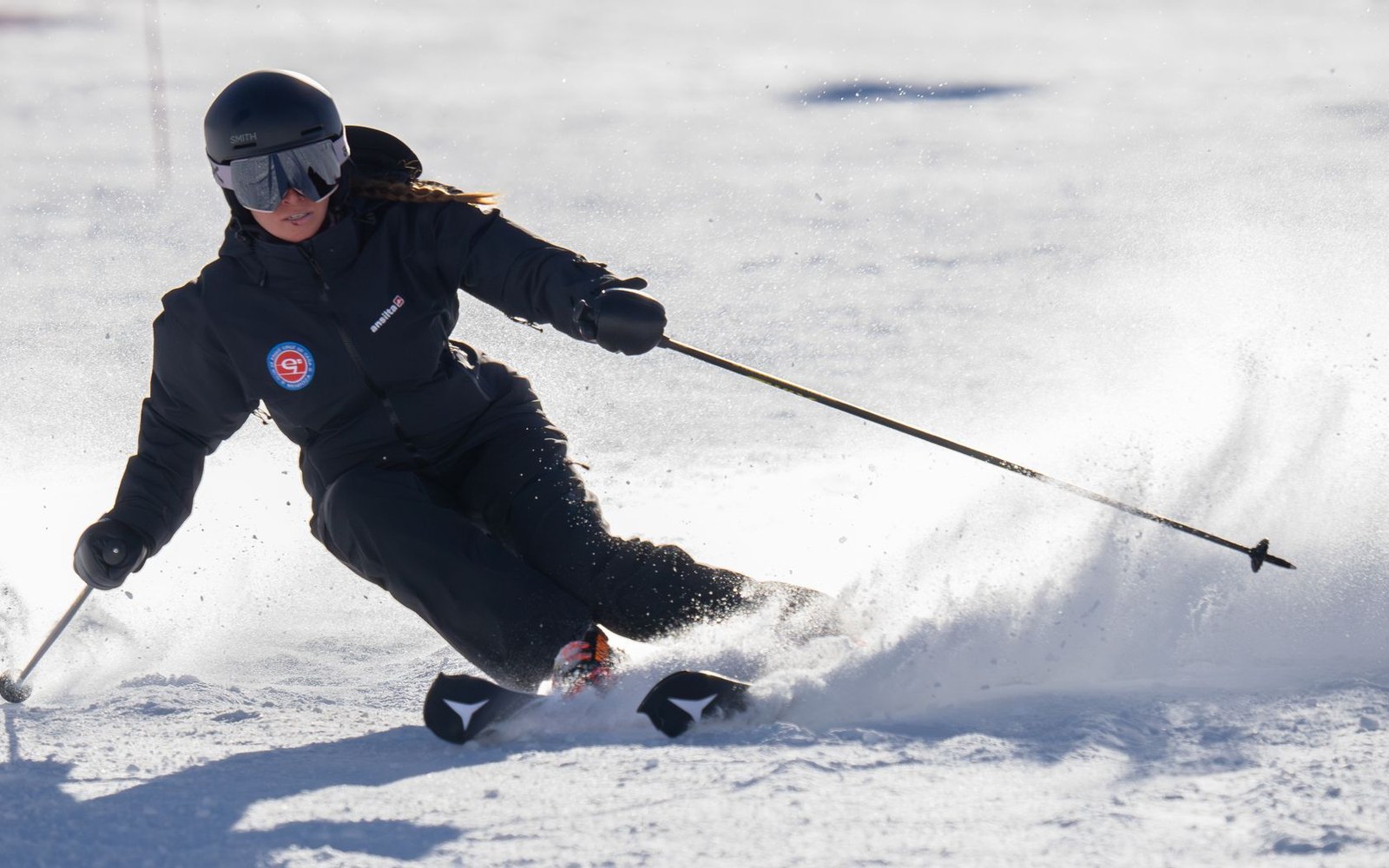
Driggs, Idaho: one shop building to both norms at once.
Photo: Mateo Franciosi / Pexels
The only NTN binding made on this side of the Atlantic comes out of a small town at the foot of the Tetons.
The Place Shapes the Product
Driggs, Idaho sits on the quieter, Idaho-facing western slope of the Teton Range — population under two thousand, surrounded by the kind of terrain that has a way of clarifying what ski hardware actually needs to do. 22 Designs ↗ operates here, building the Outlaw X and the Lynx: the two NTN bindings manufactured in North America and, as far as the wider market is concerned, the primary American answer to a standard otherwise dominated by Rottefella in Norway and The M Equipment in France.
A bin of machined parts is roughly one production run at this volume.
Photo: Daniel Smyth / Pexels
The choice of Driggs is not incidental. The Teton backcountry is a demanding laboratory — variable snowpack, significant vertical, and a local free-heel culture that expects gear to perform in genuine consequence terrain. What comes out of that environment is hardware built to a specific sensibility: mechanically direct, field-serviceable, and oriented toward backcountry travel as much as resort skiing.
Two Bindings, Distinct Purposes
The Outlaw X is 22 Designs' flagship — an NTN binding with a free-pivot touring mode for skinning. It is the binding that defines the company's position in the market: a full-featured NTN design that competes directly with the Meidjo from The M Equipment.
The Lynx sits below it — a non-releasable NTN binding aimed at skiers who prioritize weight and mechanical simplicity over release function. It occupies the same conceptual territory as a traditional cable binding but interfaces with the NTN sole standard, introduced in 2007, which added the rotational-release geometry and the heel-capture ring that the Outlaw X depends on.
What separates both bindings from their European counterparts is partly philosophy and partly geography. 22 Designs operates on a production scale closer to a specialty manufacturer than a mass-market industrial concern, which allows for iterative hardware updates and direct responsiveness to user feedback in a way that larger production runs do not. The company has revised both bindings across successive versions — the Outlaw has gone through multiple generations — each iteration reflecting real-world performance data gathered in conditions the Tetons and the broader Wasatch-to-Teton corridor reliably supply.
One binding, laid out. Free-heel hardware is assembled in batches small enough to fit on a cloth.
Photo: Dj Shiflet / Pexels
The American manufacturing context also matters for support. Parts availability, warranty service, and technical communication all operate within domestic supply chains and time zones — a practical advantage that backcountry skiers, who tend to discover binding problems at inconvenient distances from a post office, notice acutely.
What the NTN Standard Demands
Building to the New Telemark Norm ↗ is not a minor undertaking. The standard requires precise tolerances at the toe-box interface, a heel-capture mechanism that functions reliably through the range of loads generated by the drop-knee position, and — in a releasable design — a release mechanism that behaves predictably enough to warrant the designation. The engineering burden is real, which is why the list of companies attempting it remains short.
What separates both bindings from their European counterparts is partly philosophy and partly geography
22 Designs is the only one doing it in North America. That fact has competitive implications — no domestic rival, a clear market identity — but it also carries responsibility. When North American free-heel skiers encounter problems with NTN hardware, the alternative to a European shipping wait is, in many cases, a phone call to Driggs. The company's position in the market is therefore both commercial and infrastructural: it keeps the NTN standard viable in a hemisphere where the sport's participation numbers are modest and the supply of specialist hardware is thin.
The Outlaw X and the Lynx are, in that sense, more than products. They are the reason NTN has a genuinely competitive domestic option — and that option exists because someone decided to build bindings in a small Idaho town at the foot of some very demanding mountains.