Rottefella, Norway: A Norm-Setter's History
Covers Rottefella's role in establishing the NTN standard, its position as the dominant NTN manufacturer, and the product decisions — including the Freeride discontinuation — that shaped what the norm became in practice.

The mark that formalised the New Telemark Norm in 2007.
Photo: Rottefella logo · Wikimedia Commons
The company that named the standard also decided which parts of it would survive.
From Pin Plate to Protocol
Rottefella's origins sit deep in Nordic skiing history. The company was founded in Norway in 1927, and its name — derived from the Norwegian for "rat trap" — referred to the original binding mechanism that clamped the boot toe rather than pinned it. For decades, Rottefella supplied the binding hardware that defined cross-country and touring norms across Scandinavia and beyond, a position that made it the logical author of what came next.
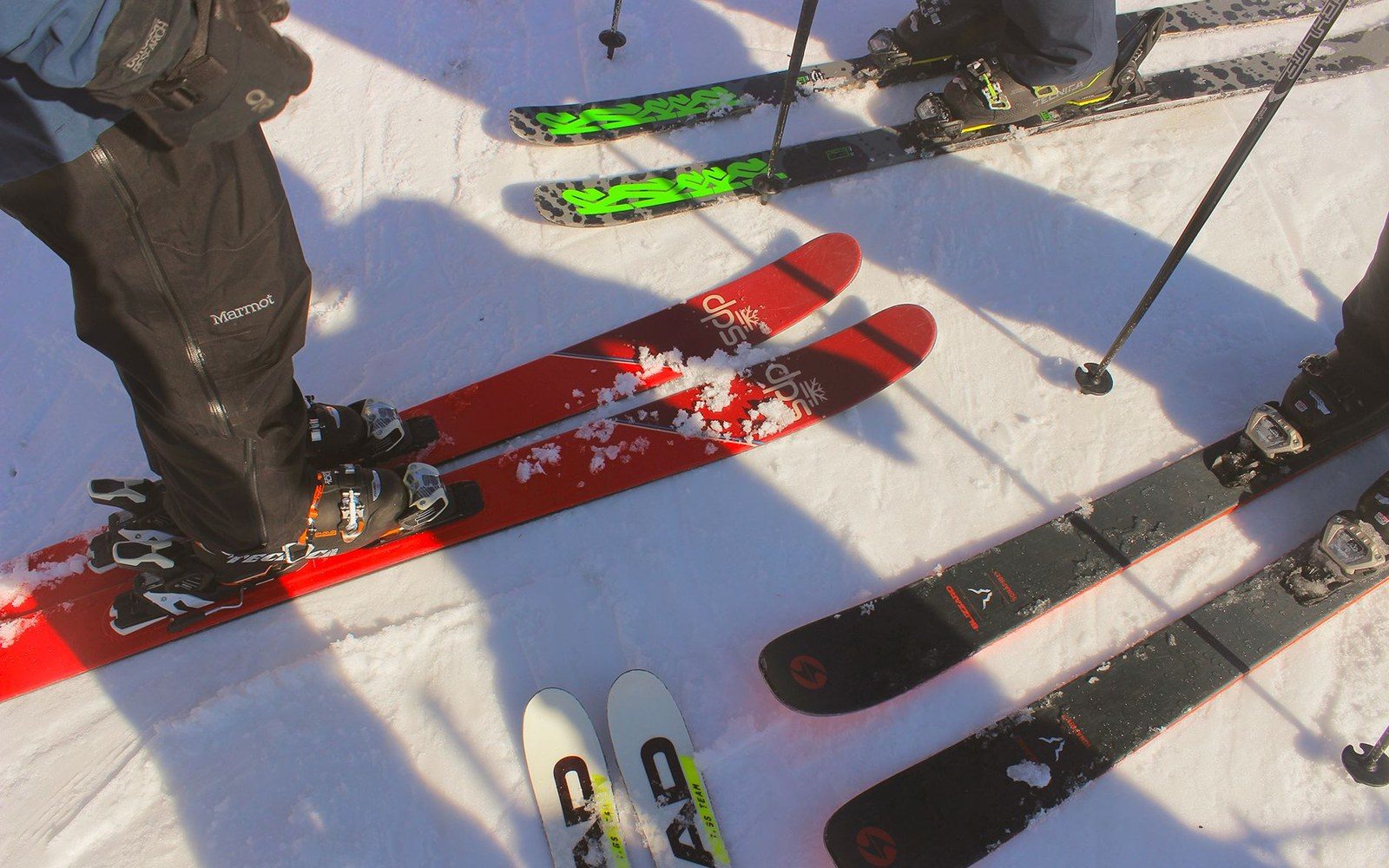
The New Telemark Norm seen from above: the claw sits forward of the toe, the pivot behind it.
Photo: sig / Pexels
When the industry began moving away from the 75mm three-pin duckbill in the early 2000s, Rottefella led the consortium that developed the New Telemark Norm. NTN, introduced in 2007 ↗, specified a wider boot-sole interface, a rotational-release mechanism absent from the old three-pin system, and a geometry that allowed the boot to flex forward through the bellows while remaining positively located in the binding. The 75mm norm had lasted because it was simple and universal; NTN lasted because Rottefella made it the platform for its own product line and actively licensed it to other manufacturers.
That licensing decision is consequential. NTN is an open standard, which is why bindings from 22 Designs and The M Equipment can use the same boots as Rottefella's own hardware. In practice, however, Rottefella's Freedom and Freeride bindings defined what most NTN skiers used for the first decade of the norm's existence, and the company's engineering choices — which features to include, which to omit — shaped skiers' expectations of what NTN could do.
Chronology
- 1927Rottefella founded in Norway
- 2007New Telemark Norm (NTN) introduced; Rottefella the lead developer
- 2020sRottefella NTN Freeride discontinued; Freedom binding continues in production
- 2025FIS drops telemark from 2026 World Cup calendar
The Freeride and What Its Absence Meant
The Rottefella NTN Freeride was the binding that made the case for the norm in hard-snow and resort conditions. It offered more lateral stiffness than the Freedom, a releasable mechanism targeted at steeper terrain, and a touring mode that allowed heel lift for uphill travel. For a period it was the binding serious alpine-oriented telemark skiers compared everything else against.
Its discontinuation — announced by Rottefella and confirmed in their product communications — removed the highest-performance NTN option from a market already thin on volume. The decision reflected the commercial reality of binding manufacturing: the tooling and production costs for a low-volume specialty product are difficult to recover when the discipline's competitive calendar is contracting. The FIS Telemark World Cup, which had provided a visible platform for the sport, was removed from the 2026 FIS calendar, eliminating the race-day visibility that binding manufacturers had used to justify premium-end development.
A bin of machined parts is roughly one production run at this volume.
Photo: Daniel Smyth / Pexels
What the Freeride's absence created was a gap that other manufacturers moved to fill — most notably The M Equipment with the Meidjo, which had already been developing releasable NTN hardware independently of Rottefella's roadmap. The norm survived the discontinuation; the product leadership it implied did not transfer automatically.
A Norm-Setter's Obligations
Rottefella's position is structurally unusual. It established the technical standard, supplies bindings under that standard, and remains the largest single entity associated with NTN in name recognition and production volume. That concentration means its product decisions carry weight beyond ordinary market competition: when Rottefella exits a category, the category shrinks, because the category's identity was partly built on Rottefella's participation.
The Freedom binding, which remained in production, continued to serve recreational and touring-oriented free-heel skiers — a lighter, simpler NTN option suited to the uphill-and-down rhythm of backcountry travel. Skins ↗ and ski crampons attach to the ski rather than the binding, so the Freedom's retention of NTN's touring-mode geometry kept it genuinely useful for skiers in ranges like the Wasatch or the Chic-Chocs, where the ascent is half the day.
What Rottefella demonstrated across nearly a century of binding development is that setting a norm and servicing that norm are different activities, carried out under different pressures. The 75mm standard outlasted every individual manufacturer who supplied it. NTN is younger, the market is narrower, and the companies supplying it are fewer — which makes Rottefella's continued presence in the category, and the specific shape of that presence, a live question for anyone building, buying, or competing on free-heel equipment.