What a Low-Volume Ski-Hardware Business Actually Looks Like
A reported piece on the economics of small-batch ski-binding manufacturing — tooling costs, minimum order quantities, distribution, and why the telemark binding market has sustained several micro-manufacturers while the alpine market has not.
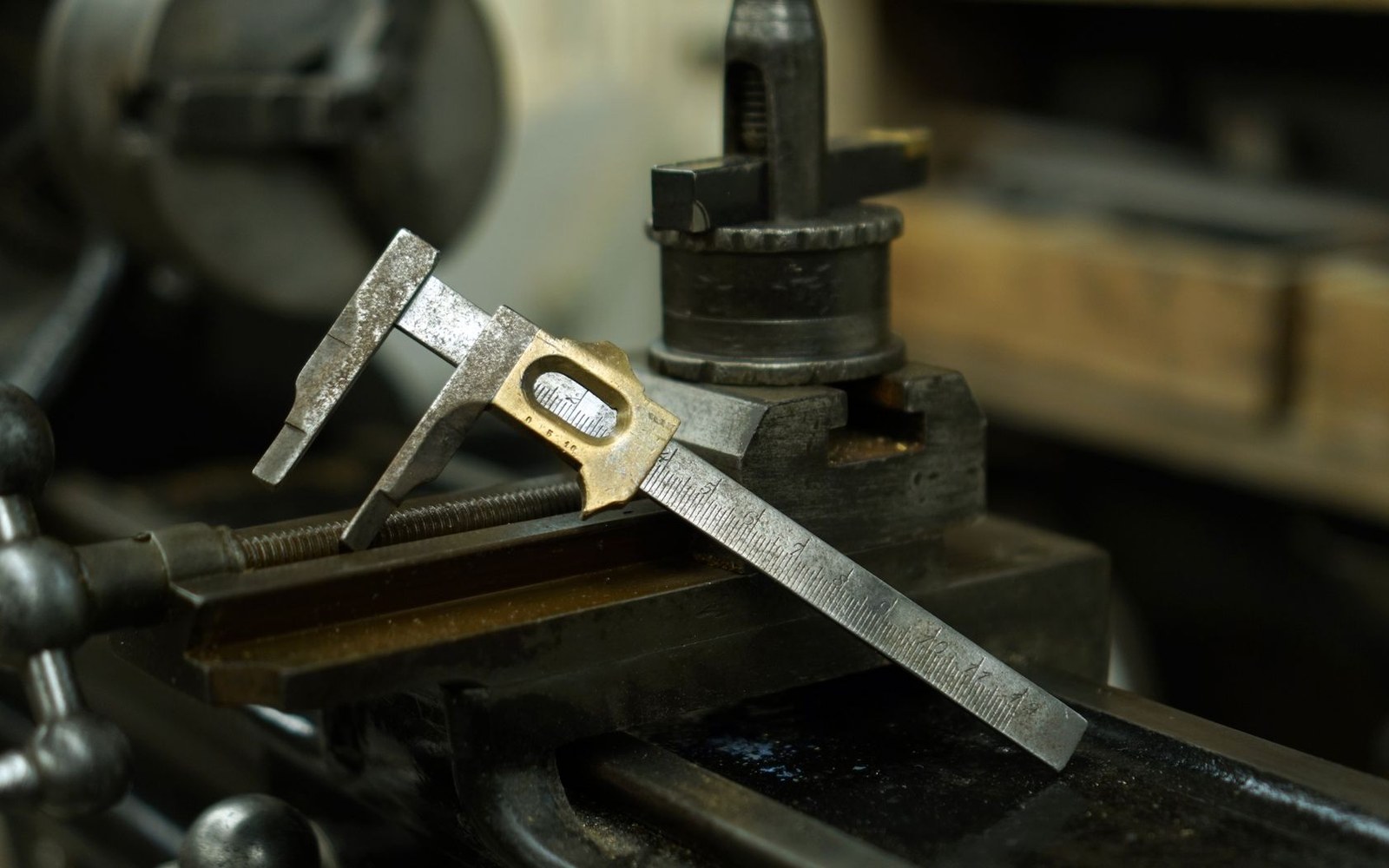
At this volume the tooling, not the labour, sets the price.
Photo: FFD Restorations / Pexels
Making a telemark binding in quantities that would embarrass a mass manufacturer — and surviving anyway.
The Numbers That Stop Most People
The first obstacle is metal. Producing a machined aluminium component — a heel cup, a toe bail, a pivot arm — requires a working tool, and a working tool requires engineering time, material, and setup. For a straightforward CNC-machined part, tooling and fixturing can run into tens of thousands of dollars before a single saleable unit exists. That capital outlay sits on the books whether the maker sells fifty units or five thousand, which means the break-even calculation looks very different at the two ends of that range.

The New Telemark Norm seen from above: the claw sits forward of the toe, the pivot behind it.
Photo: sig / Pexels
Mass manufacturers in the alpine binding market — Marker, Tyrolia, Look — spread that fixed cost across production runs that can number in the hundreds of thousands per model year. The per-unit tooling charge becomes essentially invisible. For a micro-manufacturer producing telemark bindings, it never becomes invisible. It must be recovered from a total addressable market that, even in good years, is a fraction of alpine volume. The trade publication Snowsports Industries America ↗ has tracked alpine binding shipments in numbers that dwarf total free-heel participation estimates — a ratio that has not narrowed meaningfully in two decades.
So why does anyone do it? Because the fixed cost, real as it is, does not scale with complexity the way it would in injection-moulded consumer goods. A small CNC shop — or a company with access to one — can produce a binding heel tower in a run of two hundred, price it correctly, and cover the tooling within a season or two. The model works if, and only if, the manufacturer controls operating costs ruthlessly and does not finance inventory it cannot move.
| CNC tooling and fixturing | a fixed upfront cost that must be recovered from total unit sales — for micro-manufacturers, this cost never becomes negligible |
|---|---|
| Alpine binding production volumes (per Snowsports Industries America data): orders of magnitude larger than total free-heel market estimates | |
| Break-even calculus | price × units must cover tooling + material + labour + distribution with no mass-market volume cushion |
How the Survivors Operate
22 Designs, based in Driggs, Idaho at the foot of the Teton Range, represents one version of the small-batch model taken to something like its logical conclusion. The company designs and manufactures its Outlaw X and Lynx bindings in a market-facing rather than volume-facing posture: rather than forecast demand and produce ahead of it, the business has historically built to order or near-order in batch cycles. Driggs itself is telling — the town sits minutes from Grand Targhee and the backcountry accesses of the Tetons, and the company is staffed by people who ski the products in conditions that will break them. The feedback loop from manufacturing floor to real terrain is short enough to mean that a fatigue failure or a pivot-point wear pattern shows up in the next revision, not in a consumer-complaint database three years later.
Bishop Bindings, operating at a similar scale, takes the logic further still. The BMF binding is produced in small batches using a manufacturing philosophy that prioritises dimensional precision over high throughput. Small-batch production at this level means that individual components can be inspected and matched in ways that are impossible at mass-market volumes. It also means that design changes — a revised spring rate, a modified bail geometry — can be incorporated mid-run without writing off a warehouse of obsolete parts. The penalty is that per-unit material and labour cost remains high. The mechanism by which this is absorbed is price: Bishop Bindings sells to a buyer who is already self-selected as unusually committed to the equipment.
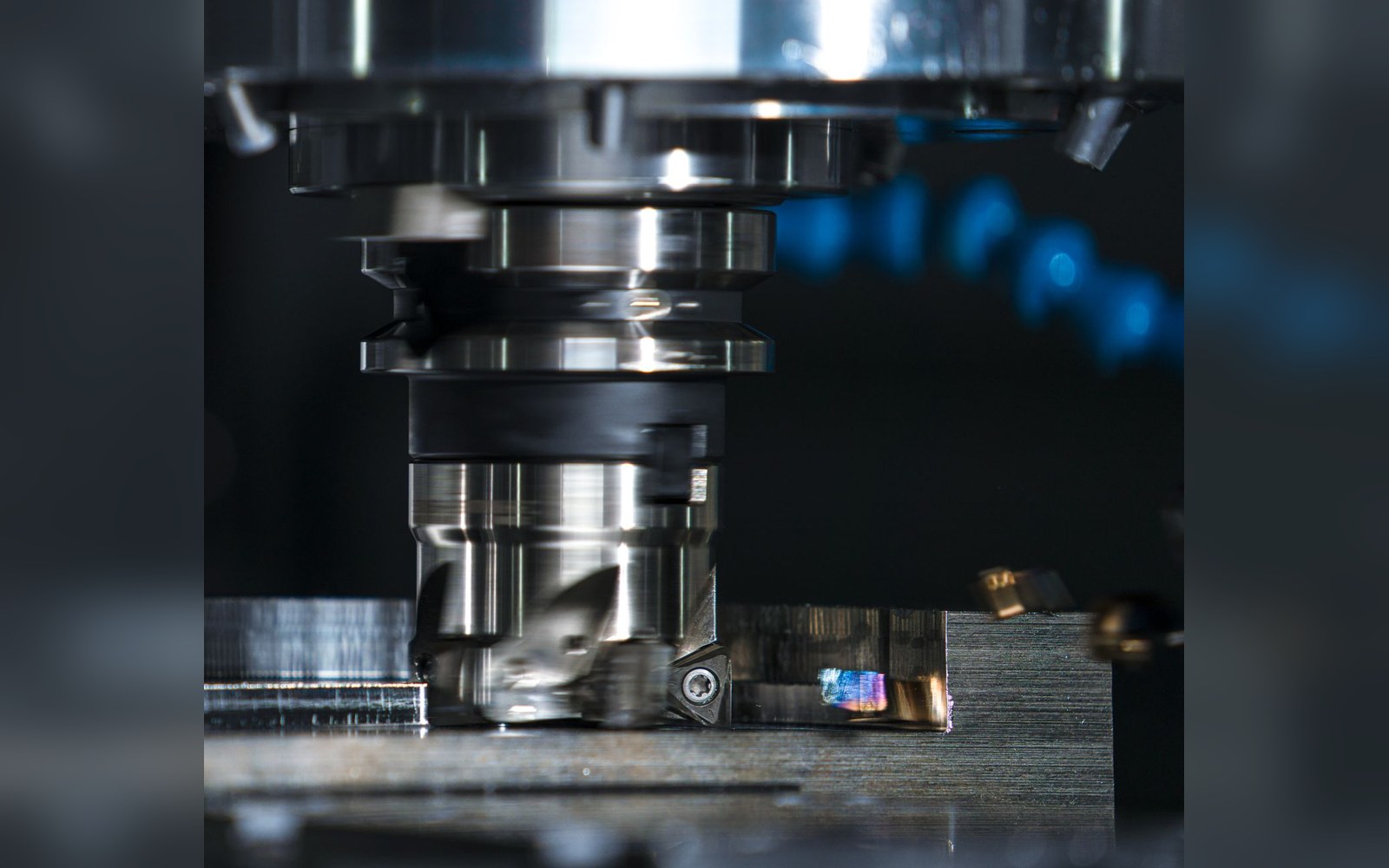
A bin of machined parts is roughly one production run at this volume.
Photo: Daniel Smyth / Pexels
The M Equipment, the French company behind the Meidjo ↗ binding, adds another dimension. The Meidjo is a releasable, tourable NTN binding with a level of mechanical complexity — a touring mode, a releasable toe unit, tech-toe compatibility options — that would, in an alpine context, require the resources of a Marker or a Salomon to develop. The M Equipment brought it to market by concentrating engineering investment in the binding's functional core, sourcing standard hardware (springs, pivot pins, fasteners) from industrial rather than sporting-goods suppliers, and building a distribution model that relies heavily on specialty retailers who already understand the product. The business does not need to educate every ski shop in North America. It needs to reach the shops and direct customers who already know what NTN means.
Rottefella in Norway occupies a different position — it is, by the standards of this market, a large company with a long institutional history as a norm-setter, responsible for introducing the New Telemark Norm in 2007. But even Rottefella's telemark division operates in a segment tiny relative to its Nordic cross-country business, and the NTN Freeride's discontinuation and partial return is a reminder that scale does not immunise a product line against the economics of low-volume speciality hardware.
The M Equipment, the French company behind the Meidjo binding, adds another dimension
Distribution, Margin, and the Direct Question
The distribution problem is, in some ways, harder than the manufacturing problem. A specialty binding with a retail price that reflects genuine production cost will sit at a number that makes a general-purpose ski shop reluctant to carry inventory. The shop's buyer knows that the binding will sell to perhaps three customers per season, occupies floor and warehouse space, and requires staff knowledge to present. The margin on a single unit, however healthy in percentage terms, does not justify the stocking cost in a shop whose revenue model depends on volume.
The response, across the small-batch segment, has generally been threefold. First, a direct-to-consumer channel — a manufacturer's own website — handles a meaningful portion of volume without surrendering retail margin to a middle tier. Second, a small number of deeply specialist retailers — shops that have built a free-heel identity and a customer base to match, found in towns like Salt Lake City near the Wasatch Range or in the orbit of Mad River Glen in Vermont — carry the product because their clientele expects it. Third, and increasingly, the international specialty distributor: a single importer per country who knows the audience, handles customs, and takes the inventory risk in exchange for exclusivity. This last model transfers the distribution problem to someone with local expertise, at the cost of a margin layer the manufacturer cannot always fully absorb.
The FIS withdrawal from the 2026 World Cup calendar cast a shadow over the competitive end of the market, where elite race bindings operate in very small volumes even by the standards of a niche already defined by small volumes. The US Telemark Ski Association and the independent event structures that ran in the absence of an FIS calendar represent the institutional floor that keeps competitive demand from disappearing entirely. Race-focused binding development — stiffer, more direct, less oriented toward touring function — is only commercially viable if there are races to sell it at.
What the telemark binding micro-manufacturer is ultimately selling is specificity. The buyer is not choosing between free-heel and alpine equipment on price or availability; the equipment is more expensive and harder to find than its alpine equivalent. The buyer has already decided that the mechanics of the drop-knee turn, the freedom of the lead change, and whatever mixture of tradition, terrain preference, and anti-orthodoxy that implies, justify a supply chain built around conviction rather than convenience. That is a narrow market. It is, demonstrably, a durable one.