AIARE and the CAA: Two Curricula, One Subject
Describes the American Institute for Avalanche Research and Education (AIARE) and the Canadian Avalanche Association (CAA) as educational institutions — their course structures, published curricula, and the certification pathways each offers, without guidance or instruction.
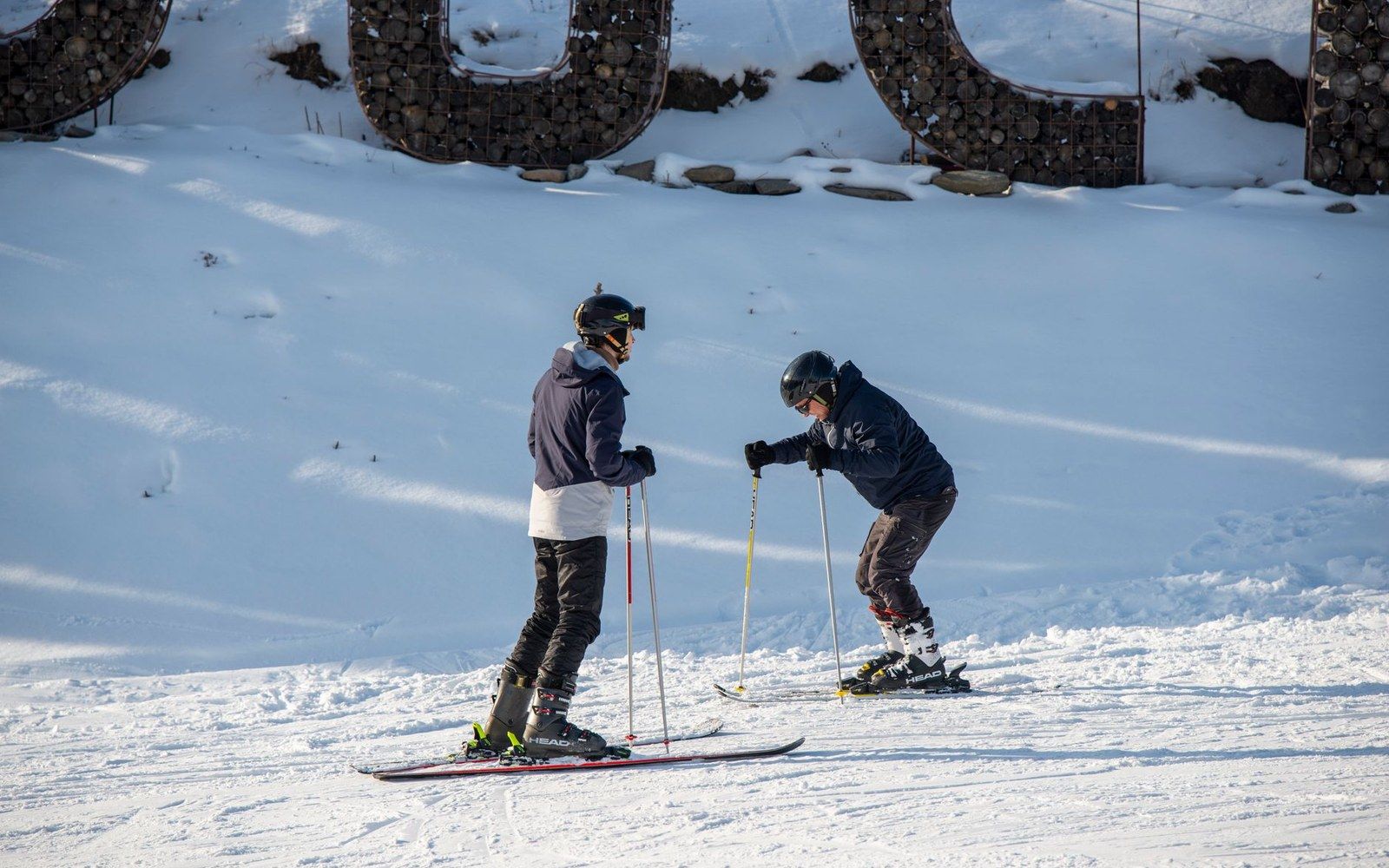
Forecast and curriculum are published outputs. This is one of them in use.
Photo: Павел Хлыстунов / Pexels
Two national bodies, parallel frameworks, and the certifications a backcountry free-heel skier will encounter
The Institutions Behind the Cards
The American Institute for Avalanche Research and Education, known as AIARE ↗, and the Canadian Avalanche Association operate as the two dominant avalanche-education bodies in North America — distinct organizations, distinct syllabi, and distinct certification hierarchies, though the subject matter they address is the same snowpack.
Both norms on one wall: duckbill and NTN setups rack together, ski for ski.
Photo: DYLBER CAUSHI / Pexels
AIARE was founded in 1994 and is based in the United States. Its public-facing curriculum runs in two recreational tiers: Level 1 and Level 2. Level 1 is the credential most commonly held by backcountry travelers; Level 2 is a more demanding continuation aimed at those leading groups or operating in complex terrain. Both courses combine classroom or online instruction with field days, and AIARE publishes its curriculum framework ↗ through a network of licensed provider organizations rather than delivering courses directly.
The Canadian Avalanche Association — the CAA — operates from Revelstoke, British Columbia, and functions simultaneously as a professional membership organization and a curriculum body. The recreational stream in Canada, delivered by Avalanche Canada rather than the CAA under the Avalanche Skills Training ↗ label, runs as AST 1 and AST 2. The structure mirrors AIARE's two-tier logic, though the syllabi are not identical and the certification cards are not interchangeable across all employer or guide contexts.
Mid-lead-change. The trailing ski carries as much of the turn as the leading one.
Photo: Elisabeth Fossum / Pexels
The practical difference that matters to a free-heel skier is geography: AIARE-provider courses are the norm in the Wasatch Range and throughout most of the American mountain West, while AST courses dominate in the Chic-Chocs and across the Canadian backcountry. A skier crossing the border for a season in the Gaspésie with an AIARE Level 1 card will find the credential broadly recognized, but the CAA's own professional tiers — Avalanche Operations Level 1 through 3 — are a separate, employment-facing ladder with no direct AIARE equivalent.
Neither body governs the other. Both update their curricula periodically in response to accident data and published research in snow science.